They've Trusted Metadrop



Metadrop builds and maintains Drupal for universities, colleges and educational institutions, governing hundreds of faculty and campus sites from one platform, accessible by law, integrated with your student systems, and secure for the long term.
Is Drupal the right CMS for a university? For most multi-site, multilingual, compliance-bound institutions, yes. Roughly 80% of the world’s top-100 universities use Drupal for at least one of their websites, including Harvard, Stanford, Yale, MIT and Princeton, because it governs hundreds of department sites from one codebase, ships accessibility and multilingual support in core, and carries no per-seat licence fees. (Source: industry adoption data, The Drop Times, reflecting the Drupal ecosystem rather than Metadrop engagements.)
Why universities choose Drupal
One codebase, hundreds of sites
A multisite architecture runs faculty, department, research-centre and campus sites with shared branding and far lower total cost of ownership; the sector commonly reports up to roughly 70% savings versus separate builds.
Accessibility and multilingual in core
WCAG-conformant themes and 100+ languages are built in rather than paid add-ons, so legal compliance and global reach come with the platform.
Open source, zero licence fees
No per-seat or renewal costs and no vendor lock-in, so budget stays on teaching, research and recruitment rather than software rent.
Built for complexity and scale
Admissions surges, research repositories, multi-audience journeys and CRM/SIS integration are core use cases, not edge cases.
Security team and clear upgrade path
Drupal’s security process and continuous, non-breaking upgrades end the end-of-support cliff that strands legacy platforms.
Talk to a team that has run multisite estates, EOL migrations and accessibility programmes for complex organisations.
Multisite governance at scale
- Govern the whole estate from one platform. Central teams manage architecture, security and design while faculties and departments keep editorial control of their own sites. Sector estates run large, with UCL 500+ microsites, Princeton 500+ and Waterloo 900+ sites as common reference points.
- Update once, deploy everywhere. A shared design system and content model push brand, accessibility and security changes across every site at once instead of site by site.
- Granular roles and permissions. Local editors publish safely inside approval workflows without touching code or filing an IT ticket.
- Non-technical publishing. Layout Builder and a WYSIWYG editor let communications and department staff build pages and microsites without developers.
- Multiple audiences, one platform. Prospects, current students, faculty, researchers and alumni each get tailored journeys from the same governed estate.
- Holds up during admissions and clearing peaks. Caching, CDN and monitoring keep prospectus, application and results pages fast under seasonal load surges.
Explore our Drupal multisite solution for faculty, department and campus networks.
Accessibility & compliance
- European Accessibility Act ready. Platforms are built to meet the EAA, in force since June 2025, so institutions avoid accessibility liability across EU operations.
- WCAG 2.2 AA and EN 301 549. Accessibility is engineered into design and build, the legal standard for public and publicly funded education websites in Europe.
- Section 508 and ADA Title II. For US institutions, accessibility is built to the standards behind the April 2024 ADA Title II ruling and its phased deadlines.
- Accessibility as governance. Across a multisite estate, compliance is enforced once in the platform and design system, then inherited by every site.
- Remediation for existing platforms. We audit, prioritise and fix accessibility debt on the sites you already run, not just new builds.
See how we deliver accessibility audits and WCAG compliance for education platforms.
SIS, CRM & LMS integrations
- Student systems and CRM. We connect the website to admissions and recruitment CRMs (such as Slate and Salesforce Education Cloud) and student information systems (Banner, PeopleSoft, Workday) so applicant and student data flows without silos.
- Single sign-on. SAML, CAS, Shibboleth and LDAP integration lets students, staff and faculty use one identity across web, intranet and learning systems.
- Learning platforms. We integrate Canvas, Moodle, Blackboard and Open edX so the website and learning environment work as one journey for students.
- Research and library systems. We connect repositories, catalogues and library tools where the platform must surface institutional content.
For course delivery and learning platforms, see our LMS and e-learning solution.

Drupal EOL: migration & upgrade
- Drupal 7 reached end of life in January 2025. D7 and D9 platforms no longer receive security support, leaving public-facing university sites exposed.
- A migration is a rebuild, not just an upgrade. Moving off D7 is an opportunity to simplify a sprawling architecture, cut content-type bloat and modernise the design, rather than a like-for-like port. We’ll tell you that honestly up front.
- Zero-downtime, version-current upgrades. Once on modern Drupal, continuous non-breaking upgrades (Drupal 10, 11 and beyond) keep you current without another rebuild.
- Automated, auditable content migration. Large content estates migrate with automated tooling and validation, so nothing is lost in the move.
Plan your move with our migrate to Drupal and Drupal upgrade services.
Multilingual & multi-audience
- 100+ languages in core. Serve domestic and international prospects, exchange students and global research partners from one platform.
- One estate, every audience. Tailored content reaches applicants, enrolled students, faculty, alumni and donors without standing up separate platforms.
- Per-language translation and governance. Built-in translation workflows and per-language permissions let each campus or country team manage its own localised content within a single coherent platform.
Security & independent technical governance
Dedicated Drupal Security Team
Coordinated advisories and a transparent process form the standard trusted by governments and universities worldwide.
Independent technical governance
A strategic partner owns architecture decisions and risk across your estate, going beyond executing tickets.
Proactive monitoring and defined SLAs
Patching runs on a defined schedule with response commitments, so a mission-critical platform stays maintained.
GDPR and data protection by design
Consent management and lawful handling of applicant and student data are built into the architecture.
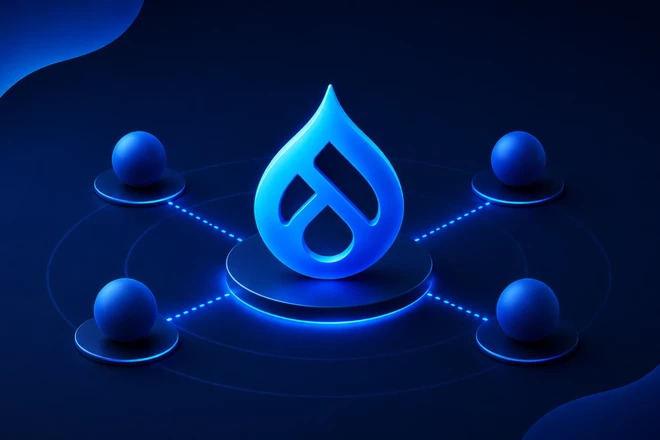
Drupal Multisite Solutions: Manage Multiple Websites Efficiently

LMS & E-learning
Drupal development, solutions and support across the platform lifecycle
Drupal accessibility audit for EAA & WCAG 2.1 compliance
Drupal maintenance & support services

Drupal Migration Services: Migrate Any CMS to Drupal
Why Metadrop for higher education
Many of these obligations overlap with our work in government and public sector.
15+ years of Drupal, Silver Certified Partner
A long-tenured specialist, with Drupal as the core practice.
Full lifecycle
Strategy, design, development, migration, maintenance and support sit under one accountable partner.
International reach
Metadrop supports clients across 50+ countries and 30+ languages, so multilingual, multi-campus rollouts launch consistently everywhere.
Enterprise-grade reliability
We run mission-critical multisite estates for multinational organisations with strict compliance and uptime needs.
Compliance track record
ENS certified, GDPR-ready and WCAG-proven across regulated and public-sector platforms.
Our experience
- Migrated a multinational organisation from Drupal 7 to a modern multisite platform, refactoring a sprawling architecture down from 20 content types to 6 and automating the migration of 5,700+ content items, the same EOL challenge most universities now face.
- Delivered zero-downtime Drupal 10 and Drupal 11 upgrades on a live enterprise estate, proving the continuous-upgrade path that ends repeated rebuilds.
- Took over a neglected Drupal platform from a previous provider, stabilised and secured it, then transformed a single site into a scalable multisite architecture, a common scenario for institutions outgrowing a legacy build.
- Built single sign-on and document-system integrations (SSO via OAuth/Azure AD, document sync) across a multilingual multisite estate, the integration pattern universities need for SIS, CRM and library systems.
- Delivered WCAG AA accessibility and multilingual content workflows across enterprise multisite platforms operating in dozens of countries.
Let’s scope the path forward together.
Frequently asked questions
How many universities use Drupal?
Around 80% of the world’s top-100 universities use Drupal for at least one of their websites, including Harvard, Stanford, Yale, MIT and Princeton (industry adoption data, The Drop Times). It is the most widely adopted CMS in higher education because it governs large multisite estates, ships accessibility and multilingual support in core, and carries no licence fees.
Why do universities choose Drupal over WordPress?
For multi-site, multilingual, integration-heavy institutions, Drupal is the stronger fit. Drupal handles hundreds of department sites from one codebase, has native multilingual support, a granular permissions model, and a dedicated security team. A single-language brochure site may not need Drupal; a university platform almost always does.
What is a Drupal higher-education multisite?
It is a single Drupal installation that runs hundreds of department, faculty and campus sites from one shared codebase. Each site has its own content and editors, while security patching, the design system and governance are managed centrally, so you update once and deploy everywhere.
Is Drupal accessible and EAA / WCAG / ADA compliant?
Yes, accessibility is built into Drupal core and enforced across the estate. We build to WCAG 2.2 AA and EN 301 549 for the European Accessibility Act (in force June 2025) and to Section 508 / ADA Title II for US institutions, and we remediate accessibility debt on existing sites.
Can Drupal integrate with our SIS, CRM and LMS?
Yes. Drupal integrates with admissions and recruitment CRMs (Slate, Salesforce Education Cloud), student information systems (Banner, PeopleSoft, Workday), single sign-on (SAML, CAS, Shibboleth, LDAP) and learning platforms (Canvas, Moodle, Blackboard), so applicant and student data flows without silos.
Our Drupal 7 site is end-of-life, how long does a university migration take?
Drupal 7 reached end of life in January 2025, so migration is now urgent. Timelines depend on scale, but treat the move as a rebuild rather than a like-for-like upgrade. We start with a discovery and audit to scope the architecture, then migrate content with automated, validated tooling.
Who can edit which sites in a multisite estate?
Granular roles and permissions let each faculty or department edit only its own sites, inside central approval workflows. Local editors publish without code or IT tickets, while the central team retains control of architecture, security and brand.
Ready to modernise your university platform?
Tell us about your estate, the version you’re on, your accessibility deadline, or the systems you need integrated, and we’ll scope a free consultation with no commitment required. With Drupal 7 now end-of-life and the European Accessibility Act in force, the sooner we start, the safer your timeline.