
Drupal Content Specialist Course

Drupal Behat Course - Behavior-driven development (BDD)

Drupal Unit Testing / TDD course with PHPUnit

Who the training is for
The most common starting point is no in-house Drupal capability: the team never had it, or it lost the person who did. Training helps organisations develop that competence internally, reducing long-term reliance on external support.
The second is a handover in progress. An in-house team is taking over a platform someone else built, and needs to work to the standard the codebase already assumes: version control discipline, test coverage, a release routine.
Agency teams are the third. The agency's own developers are the trainees, on a platform the agency delivers to its own client, and the agency scopes and buys the training.
Underneath all three sits the budget holder's question: train or hire? Hiring adds a person, training raises the level of everyone already on the platform. Both are valid, and the split is decided during scoping, against the platform and the timescale. The outcome can be assessed through practical exercises and assessment results where the programme includes them, rather than through a certificate.
Editors and site builders are trained through a role-based programme scoped for their role, not through the developer courses above.
How the training is delivered
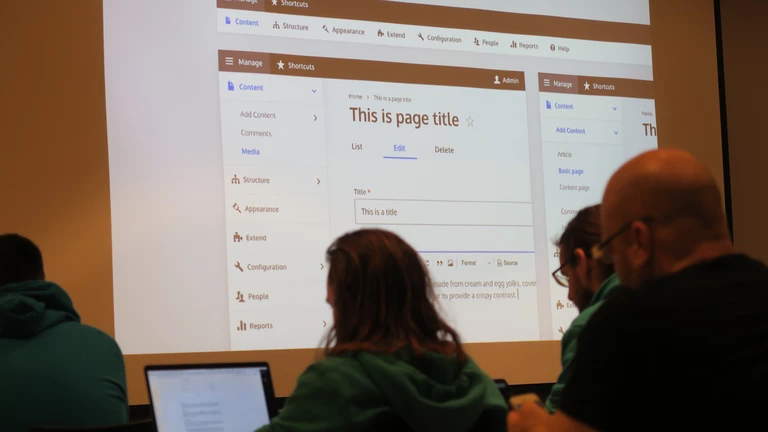
Training runs in four formats, which combine: self-paced courses on Metadrop's e-learning platform, with lessons, progression and assessment tests; live themed sessions by video conference; release training when a new feature ships; and role-based programmes built around one role and its responsibilities. A format describes how a course is delivered. The packaged catalogue is the course list above, and anything beyond it is scoped as tailor-made training.
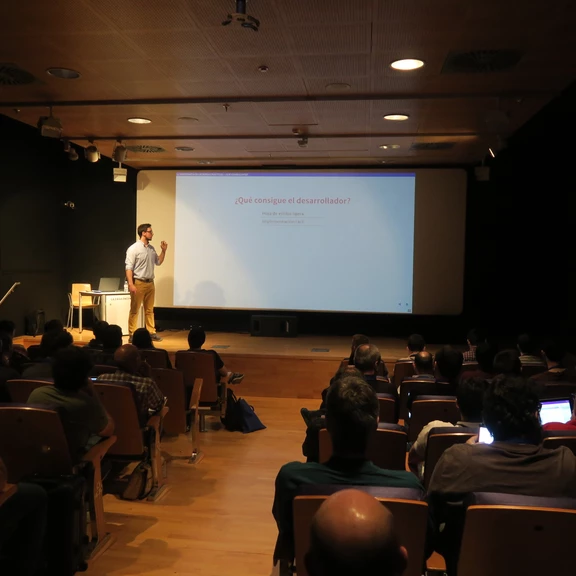
Sessions run on-site at your offices or remotely, or as a mix, agreed during scoping. They are worked as workshops: exercises against a working environment rather than a lecture. Where the engagement calls for it, material is built against the client's own configuration instead of a generic Drupal install, and the Drupal version the material targets is agreed during scoping, against the platform the team actually runs.
Courses are delivered in English or Spanish. Much of the existing material was authored in Spanish, so the delivery language is agreed during scoping, and translating or re-recording a course is scoped as work rather than assumed. Metadrop teaches across Europe, on-site or remotely, from a base in Spain and therefore inside EU jurisdiction.
There is no public calendar. Training is scheduled per engagement, so there is no open-enrolment date to wait for.



What a training engagement leaves behind
The engagement is designed so the material remains useful after the sessions have finished. What stays with the team:
- a course or session set covering the agreed scope;
- recordings of every live session, added to the library;
- assessment results where the programme includes tests, so competence is verifiable rather than assumed;
- a maintained FAQ distilled from the questions that actually came up during delivery.
These are engagement deliverables, and the courses do not issue an accredited or official certification. Metadrop's own credentials, Drupal Association Silver Certified Partner, ENS and ISO 9001, are company certifications and a separate thing.

Who teaches the courses
Courses are taught by engineers actively involved in the delivery and maintenance of client platforms. The team behind them has 15+ years building Drupal platforms, 120+ contributed modules on drupal.org, Drupal Association Silver Certified Partner status and Acquia Bronze Partner status.
Behat and PHPUnit suites are built and run in production Drupal projects across the portfolio, so the practice taught is the practice used. Metadrop has presented Behat and BDD material at Drupal community events, including DrupalCamp Spain, Drupal Day and a workshop at DrupalCamp Sevilla, and published the write-ups. A two-day on-site Behat and Drupal integration course was delivered at the digital agency of a Spanish regional public administration, with developers, QA and department heads in the room.
On a multi-brand Drupal estate for a multinational home-appliances manufacturer, running three sites in five languages, editor training and documentation were part of the delivered scope, alongside the end-to-end Behat framework built on that same platform. On a global B2B marketplace in the wind-energy sector, the technical-lead engagement included training the client's in-house team, with the aim of increasing the client's operational autonomy.
They've Trusted Metadrop
From manufacturing and public administration to NGOs, universities and global marketplaces, organisations across Europe and beyond have collaborated with Metadrop over 15+ years of Drupal delivery.













Two ways to buy the training
The first is a standalone engagement, with its own scope and budget: an onboarding programme for a new team, a course built around one topic, or a fixed curriculum delivered and assessed.
The second is bundled into a Drupal maintenance contract, as the ongoing training that keeps a team current as the platform evolves. It is the same contract that carries the video library and the maintained FAQ.
Rates are not published. The scope drives the number, so a short scoping conversation comes before any figure.
Tailor-made training
Metadrop builds courses to order in methodology and web development, scoped against the team's platform and the outcome the organisation is after. Each tailor-made programme is built for the engagement, rather than pulled from a longer catalogue of existing courses.
Two starting points come up most often: a role-based programme for a team taking over a platform, and release training as a significant new feature ships. The first conversation covers the team's current level, the platform, the format mix, the delivery language, and whether the training sits standalone or inside a maintenance contract.